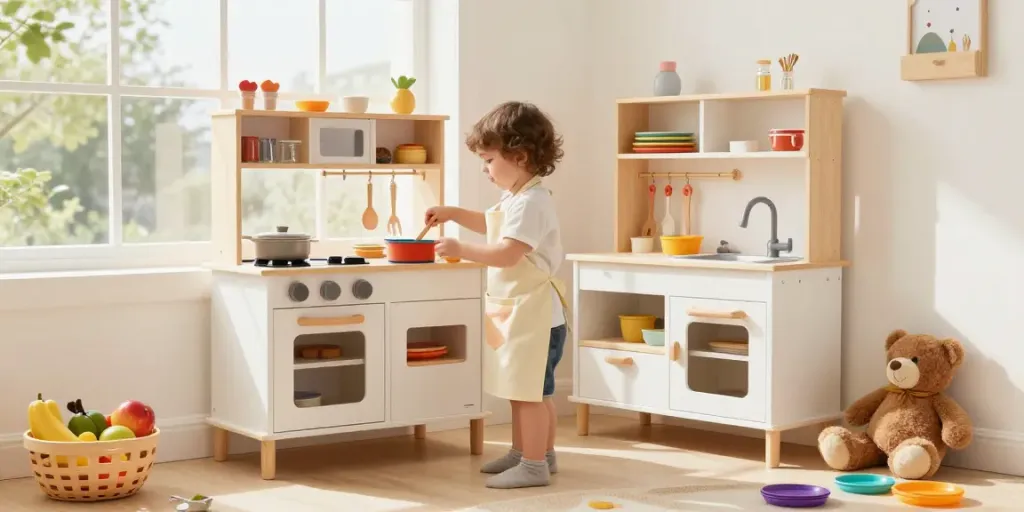
Understanding the Importance of Kids Kitchen Play Sets
For many children, the allure of a kids kitchen is undeniable. These playsets are not merely toys; they serve as a practical tool in fostering creativity, social skills, and cognitive development. Play kitchens allow children to mimic adult behaviour in a safe and controlled environment, where they can explore, imagine, and learn through play.
Why Kids Kitchen Play Sets Encourage Learning
Kids kitchen sets offer various benefits that enhance learning experiences. Through imaginative play, children can develop critical thinking and problem-solving skills as they navigate through their cooking scenarios. Additionally, by role-playing everyday tasks, they learn about responsibility and the importance of collaboration when involving playmates in their culinary adventures.
The Role of Imaginative Play in Child Development
Imaginative play is fundamental to a child's development. Engaging with a kids kitchen stimulates their creativity, allowing them to invent stories and understand the world around them. Between the ages of 2 to 6, children often engage in parallel play where they observe and mimic behaviours exhibited by others, which is crucial for developing social skills.
Choosing the Right Kids Kitchen for Your Child's Age
When selecting a play kitchen, it is essential to consider your child's age and preferences. Different age groups have varying needs and capabilities, which can significantly influence how they interact with their kitchen set. Younger children may benefit from simpler designs with fewer components, while older children might appreciate more elaborate setups that include realistic features.
Common Mistakes When Setting Up a Kids Kitchen
Creating a nurturing play environment requires attention to detail. Many parents make common errors that could hinder their child's play experience. Understanding these pitfalls can help you create a more suitable atmosphere for imaginative play.
Overlooking Safety Features in Kids Kitchen Sets
Safety should be the paramount concern when purchasing any toys. Play kitchens should be free from sharp edges and small parts that may pose choking hazards. Consider looking for kitchens made from non-toxic materials that meet safety regulations.
Ignoring Space Requirements for Play Areas
Before setting up a kids kitchen, evaluate your available space. Many families overlook the spatial requirements needed for these playsets. Ensuring there is enough room not only for the kitchen but also for children to play comfortably can greatly enhance the experience.
Choosing the Wrong Materials and Durability Factors
The material of a play kitchen plays a significant role in how long it will last. Opt for kitchens made from sturdy materials, such as solid wood or high-quality plastics, which can withstand the wear and tear associated with play.
Essential Features to Look for in a Kids Kitchen
A well-designed kids kitchen should include various features that enhance the play experience. Understanding which elements to prioritise can help you select the best option for your child.
How Interactive Elements Enhance Play Experiences
Interactive elements, such as working knobs, sinks, and appliances with lights and sounds, can elevate the play experience significantly. These features not only engage children but also encourage them to explore different scenarios and narratives.
The Importance of Realistic Kitchen Accessories
Providing realistic kitchen accessories can enhance imaginative play. Sets that include pots, pans, utensils, and play food can stimulate creativity as children recreate scenes from their culinary aspirations.
Incorporating Educational Tools in Play Kitchens
Educational tools, like measuring cups or pretend cooking challenges, can turn playtime into a valuable learning opportunity. Integrating these elements helps children learn basic maths and measurements while having fun.
DIY Tips for Creating a Perfect Kids Kitchen Space
Creating the perfect play environment for your child’s kitchen can be a rewarding project. With some creativity and planning, you can set up an engaging space that encourages imaginative play.
Optimising Small Spaces for Play Kitchens
If space is limited, consider strategies to optimise your area. Wall-mounted shelves or foldable play kitchens can provide excellent alternatives that do not compromise playability while saving space.
Customising Your Kids Kitchen for Personalised Play
Personalisation can enhance your child's attachment to their kitchen. Adding family photos, custom name tags, or themed decor can make the experience feel more special and tailored to your child's preferences.
Decorative Ideas to Enhance the Kitchen Theme
Incorporating vibrant colours, themed wall decals, or fun storage solutions can transform a simple play area into an exciting kitchen space. Consider the interests of your child—if they love baking, you might decorate their kitchen with pastry-themed accessories.
Future Trends in Kids Kitchen Playsets for 2026
The landscape of kids kitchen playsets is continually evolving. As we move toward 2026, several trends are expected to shape how these toys are designed and marketed.
Innovative Materials and Eco-friendly Options
Parents today are more environmentally conscious, which has led to a demand for eco-friendly materials. Manufacturers are increasingly focusing on sustainable sourcing and recyclable materials to create safe and environmentally responsible products.
Integrating Technology in Kids Kitchen Designs
The future of play kitchens will likely see increased integration of technology. Interactive apps that offer cooking lessons or augmented reality features that bring play to life can create unique, engaging learning experiences.
Predictions for the Most Popular Themes and Styles
As trends evolve, certain themes may gain popularity. For instance, vintage or farmhouse-style kitchens could see a resurgence, appealing to parents seeking nostalgia while providing children with a charming play environment.
What is the best kitchen for kids?
The best kitchen for kids typically combines durability, safety, and interactive features. A play kitchen with realistic accessories and sturdy construction will not only last but also enhance the play experience.
What age to get rid of kids kitchen?
As kids grow, their interests may shift. Generally, play kitchens can remain relevant until children reach around 8 years of age, depending on their preferences and how they engage with the toy.
How much does a kitchen set for kids cost?
The cost of a kids kitchen can vary widely based on size, materials, and features. Basic models may start around £50, while larger, more elaborate sets can reach upwards of £300.
Where can you buy kids kitchens?
Kids kitchens are available at various retail outlets, both online and in physical stores. Popular options include toy stores, department stores, and specialised online retailers.